
CPAP Not Working? Here's How to Fix It
If your CPAP feels uncomfortable, ineffective, or frustrating—you're not alone. Most issues can be fixed with the right adjustments.
Book an Appointment to Optimize Your CPAPWhat is CPAP (and Why It Matters)
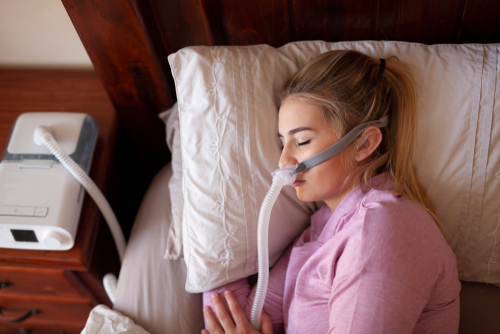
Continuous Positive Airway Pressure (CPAP) is the most effective treatment for Obstructive Sleep Apnea, a condition where breathing repeatedly stops during sleep.
A CPAP machine:
- Keeps your airway open
- Prevents oxygen drops
- Improves sleep quality and energy
When properly optimized, CPAP therapy can significantly reduce risks associated with untreated sleep apnea, including cardiovascular complications.
Learn more: aasm.org · nhlbi.nih.gov
Common Reasons Your CPAP Isn't Working
01
Pressure Feels Too High or Too Low
- Too high: discomfort, air swallowing, mask leaks
- Too low: continued snoring, poor sleep
02
Mask Problems (Leaks, Fit, or Discomfort)
- Air leaking around the mask
- Skin irritation or pressure marks
- Mask shifting during sleep
03
Still Feeling Tired
Settings may not be optimized or other sleep issues may be present.
04
Dryness, Congestion, or Discomfort
- Dry mouth or throat
- Nasal congestion
- Sinus irritation
05
Trouble Staying Consistent
Difficulty tolerating CPAP can reduce effectiveness.
Why CPAP Often Fails
Most patients are given a CPAP machine but not enough follow-up. CPAP requires ongoing adjustment.
How We Fix Your CPAP
1
Data Review
2
Pressure Optimization
3
Mask Optimization
4
Address Underlying Issues
What You Can Expect
-
Better sleep quality
-
Improved energy
-
Reduced apnea events